


Yes. California law allows recovery when a collision aggravates a preexisting condition. Medical records showing your condition before and after the crash become especially important because they help establish what changed.
Santa Ana Car Accident Lawyer
 A vehicle crash turns your routine upside down in seconds. Before you have had time to process what happened, you may be facing mounting medical bills, time away from work, and an insurance adjuster asking questions designed to limit what they pay you.
California law gives injured people the right to seek compensation when another driver’s negligence caused the collision. Still, the strength of that claim depends on the evidence gathered and the timeline followed.
At Cardona Law Firm, we give clients direct access to attorney Christian Cardona through our client portal, where you can send messages, get updates, and communicate directly with the person handling your case. Call (800) 511-9191 to request your free case review.
What Sets Cardona Law Firm Apart
At Cardona Law Firm, our Santa Ana office at 600 W. Santa Ana Blvd., Suite 790, is built around one priority. We make it easy for you to reach and communicate with the attorney handling your case:
- Direct access: You can reach attorney Christian Cardona directly through our secure client portal, where texting and messaging make it easy to stay in contact throughout your case.
- In-person meetings: Face-to-face meetings make complex decisions easier.
- Fast response times: Questions after an appointment or insurance call get answered promptly.
- Spanish-speaking support: Clear communication in your preferred language helps you make better decisions at every stage.
- 24/7 after-hours answering: Accidents and urgent questions don’t follow a 9-to-5 schedule.
Attorney Christian Cardona personally oversees every case and every major decision from start to finish. That level of direct attorney involvement is rare in personal injury practice, and it makes a real difference in how your case is handled.
Types of Car Accidents in Santa Ana
Not all collision claims are handled the same way. The specific type of wreck shapes the evidence that matters most and the arguments an insurer is likely to raise:
- Rear-end crashes: Common in stop-and-go traffic on the 5 and 22 freeways, these cases often center on following distance, distracted driving, and disputed speeds.
- Intersection collisions: Cases involving cross-traffic often hinge on signal timing, turn movements, and right-of-way documentation.
- Sideswipe crashes: Lane changes, blind spots, and freeway merging are frequent issues in these claims.
- Head-on impacts: These wrecks tend to result in severe injuries and major disputes over lane position and impairment.
- T-bone collisions: Often occurring at intersections, these cases may involve red-light or stop-sign violations.
- Multi-vehicle pileups: When several drivers and insurers are pointing fingers at one another, sorting out liability takes more documentation and a clear factual record.
Each type of crash calls for a different approach, and identifying the right evidence early matters.
What Causes Car Accidents in California?
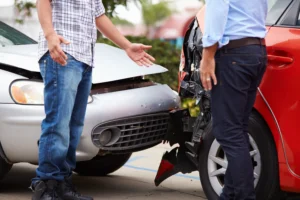
Most crashes in California trace back to a handful of repeated behaviors.
- Distracted driving: Phone use, in-car navigation systems, and other diversions delay braking and reduce hazard awareness.
- Speeding: Higher speeds shorten reaction time and typically worsen injury severity.
- Unsafe lane changes and turns: Quick merges, blind-spot failures, and rushed left turns produce many preventable wrecks.
- Impaired driving: Alcohol and drug use compromise reaction time, judgment, and vehicle control.
- Drowsy driving: A fatigued driver can drift between lanes, miss signals, or react far too slowly.
- Tailgating: Following too closely eliminates the margin needed to avoid impact when traffic slows.
The cause must be proven with facts, such as the police report, photos, witness statements, phone records, or nearby camera footage. The more serious the injury, the more that early review matters.
Common Types of Car Accident Injuries
A collision, even at moderate speed, can produce injuries that are not immediately obvious, and some do not appear on initial X-rays or surface until days after the crash:
- Whiplash and soft tissue injuries: Neck and back strains are among the most frequent complaints after a rear-end crash, and symptoms sometimes develop hours or days after impact.
- Herniated or bulging discs: The sudden jolt of a collision can compress spinal discs, causing pain, numbness, or radiating discomfort into the arms or legs.
- Traumatic brain injuries: A head strike against the steering wheel, window, or headrest can cause a concussion or more serious brain injury, sometimes without any direct impact at all.
- Broken bones: Wrists, ribs, clavicles, and legs are commonly fractured in higher-speed crashes or when airbags deploy.
- Shoulder and knee injuries: Torn ligaments, rotator cuff damage, and meniscus injuries frequently appear after crashes and often require surgery or extended physical therapy.
- Lacerations and scarring: Broken glass, deploying airbags, and metal contact can cause cuts that result in permanent scarring.
- Psychological harm: Anxiety, post-traumatic stress, and sleep disruption are documented consequences of serious accidents and are compensable under California law.
Getting evaluated promptly, even when discomfort seems minor, creates a record that connects your injuries to the crash. Gaps in treatment are among the most common reasons insurers dispute claims.
How Much Is My Car Accident Case Worth?
There is no honest formula for this. Case value depends on how severely you were injured, how clear the liability is, how much treatment you required, whether you lost income, and whether the collision changed your day-to-day life in lasting ways.
A settlement or jury award is influenced by practical questions that differ from case to case:
- How long do your doctors expect treatment to continue?
- Did you miss shifts, lose a contract, or fall behind on self-employment income?
- Did a provider place permanent restrictions on your activity or work capacity?
- Did the wreck aggravate a condition you already had?
- Is the injury expected to resolve fully, or will it continue to affect you months or years from now?
The records need to tell a consistent story. When billing, treatment notes, and wage documentation align, the claim stands on firmer ground.
What Damages Can I Recover After a Car Accident in California?
California Civil Code § 1431.2 defines two categories of recoverable losses. Economic damages cover objective financial losses, including medical bills, lost earnings, and property costs. Non-economic damages cover pain, emotional distress, and loss of companionship. The losses you may be entitled to recover include:
- Medical expenses: Emergency room care, follow-up visits, physical therapy, imaging, prescriptions, and the cost of treatment you still need.
- Lost income: Wages, salary, self-employment earnings, and any reduction in your future earning capacity.
- Vehicle and property losses: Repair bills, rental costs, and other property-related expenses tied to the crash.
- Pain and suffering: Physical discomfort, emotional distress, and reduced quality of life caused by the collision.
- Out-of-pocket costs: Transportation to appointments, household help, and other expenses directly connected to the accident.
Pay stubs, clinical notes, prescriptions, and repair estimates all help document the actual cost of this crash.
Can I Recover Compensation If I Am Being Blamed for the Accident?
Yes. California follows a pure comparative fault rule, meaning you may still recover damages even if you share some responsibility. Under California Civil Code § 1714, liability is apportioned by fault, so the insurer assigning partial blame to you does not end your claim. Insurers raise fault arguments early to reduce their exposure, but a camera angle, a witness account, or the placement of vehicle damage can shift the picture entirely.
How Long Do I Have to File an Auto Accident Lawsuit in California?
For most injury claims arising from a car accident, California Code of Civil Procedure § 335.1 provides two years from the date of injury or death caused by another person’s wrongful act or negligence. For claims involving damage to personal property, such as your vehicle, California Code of Civil Procedure § 338 generally allows three years.
Waiting carries real risk. Records disappear, witnesses move, and physical evidence degrades over time.
Frequently Asked Questions About Car Accidents in Santa Ana
Can I Bring a Claim If the Crash Worsened an Old Injury?
Will Insurance Cover My Future Medical Treatment?
Future care can be included, but it must be supported by provider opinions and documented evidence, not verbal estimates.
Do I Need to File a Lawsuit Right Away to Protect My Claim?
No. Most claims begin with negotiations and settlement discussions. A lawsuit becomes necessary when the carrier disputes liability, undervalues the injury, or refuses a fair offer before the filing deadline.
What Should I Do Immediately After a Santa Ana Car Accident?
Call 911, get medical attention, photograph the scene, and collect insurance information from every driver. Avoid making statements about fault to the other driver’s insurer before speaking with counsel.
What If the At-Fault Driver Did Not Have Insurance?
If the at-fault driver had no insurance, your own uninsured/underinsured motorist coverage may apply. Reviewing your policy early is an important step in these situations.
Talk With Our Santa Ana Car Accident Lawyer Before Time Works Against You
Delays after a crash benefit insurance companies, not injured people. To protect your claim and understand your options, speak directly with our team as soon as possible. Our attorneys at Cardona Law Firm are ready to talk with you.
Call (800) 511-9191 or use our online contact form to schedule your free case review. Attorney Christian Cardona will speak with you directly.
Cardona
No Empty Promises
– Just Relentless Work
– Just Relentless Work
From the first call to the final outcome – we’re by your side. Always.

Over 40+ years of
legal experience
legal experience
Call For A Free Consultation
© Copyright 2026 Christian Cardona Law - All Rights Reserved.
